

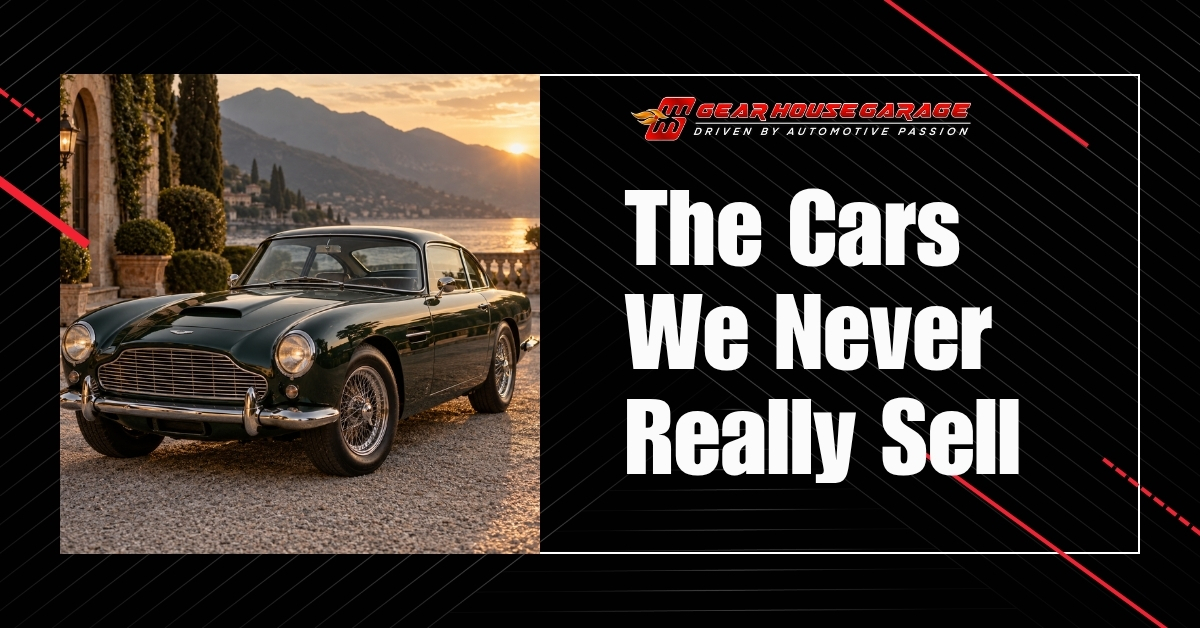
Why certain cars remain emotionally ours long after the keys and registration have changed hands
There is a peculiar kind of grief that does not quite announce itself when a car leaves your life. There is no grand finality to it. A few signatures are exchanged, the registration changes hands, the buyer drives away, and you stand there for a second longer than necessary watching the car disappear into ordinary traffic. You tell yourself it was the right decision. Usually, it was.
And yet, years later, you may still find yourself searching for that same model online. Not because you are planning to buy one, and not even because you particularly need another car. You are simply curious in a way that is difficult to explain to people who think of cars purely as appliances. You want to know whether good examples still exist, what they sell for now, and perhaps, somewhere beneath all that curiosity, whether your old car might still be out there somewhere — moving through somebody else’s life while continuing to occupy a corner of your own.
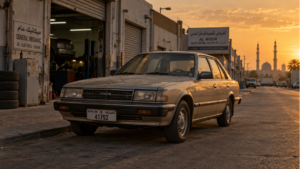
That is the strange thing about certain cars: we never really sell them. The paperwork may say otherwise and the new owner may have had the keys for years, but some machines continue to belong to us in memory long after ownership has become a technicality.
“We usually sell cars for practical reasons. We miss them for completely impractical ones.”
The cars that become part of the story
Most of us have owned cars that made perfect sense. They were practical, dependable and useful. They got us where we needed to go, did their job without much fuss and eventually left our lives without leaving very much behind. We may remember them fondly, but not intimately.
Then there are the others — the cars that somehow absorb entire chapters of our lives. It might be the first proper car bought after years of hard work, the old four-wheel-drive that carried a family through countless road trips, or the sedan that was there through a first job, a first heartbreak and the first real taste of independence. Sometimes it is the car a father finally handed over one evening with a simple, “Take the wheel.”
These cars are not remembered as products. They are remembered as companions to who we were at the time. We do not miss them because of their specification sheets, performance figures or brochures. We miss them because memory attached itself to metal.
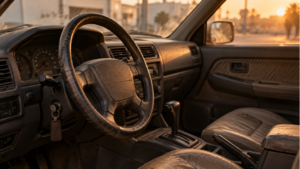
Nobody really reminisces about an old car by quoting its torque figure. What stays with us is usually far less measurable: the way the driver’s door sounded when it shut, the rattle that appeared at a particular speed, the stubborn mark on the upholstery that never quite disappeared, or the smell of sun-warmed leather in the afternoon. We remember the route we drove most often, the music that always seemed to be playing and the people who occupied the passenger seat.
More than anything, we remember where we were in life when that car was ours. Often, what we really miss is not just the machine but the version of ourselves that existed alongside it.
Why selling one can feel strangely wrong
At the time, selling the car is usually perfectly rational. The family becomes larger, maintenance starts costing more than it should, circumstances change, a move happens, or something newer and more practical simply makes more sense. Sometimes we sell because we have to. Sometimes we sell because we genuinely believe we are ready to move on.
Practically speaking, we often are. Emotionally, the answer can take much longer.
That may explain the curious habit so many enthusiasts share: searching for old models late at night with no serious intention of buying one. We tell ourselves we are only checking what is available or wondering how prices have changed. Then we scroll longer than necessary, instantly recognise the wrong wheels, notice whether an interior is original, and pause when one appears in exactly the right colour and specification.

For a brief moment, an irrational thought appears: could that be mine?
“We are not searching for transport. We are searching for a feeling.”
The truth is that when people say they want an old car back, they often do not actually mean they want another example of the same model. They mean they want their one.
Another car may be cleaner, lower mileage, rarer and objectively better preserved. It may have the same paint, engine, year and trim. But it does not have the same scratches, the same imperfections or the same years inside it. It may look familiar, but it does not feel known.
Why buying another one is never quite the same
Replacing a beloved old car can therefore be surprisingly unsatisfying. The replacement may recreate the shape, noise and basic driving experience, but similarity is not continuity. It has lived somebody else’s life. Its scratches were created elsewhere, its odometer tells another story, and its passenger seat carries memories you were not present for.
Cars do not become meaningful because they are identical. They become meaningful because they become personal.
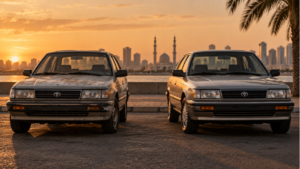
The mileage that matters most is not always the number displayed on the dashboard. Sometimes it is the mileage through your own life.
“You can replace the machine. You cannot replace its mileage through your life.”
The machine as a memory container
For somebody outside automotive culture, this level of attachment may seem excessive. After all, a car is an object — a machine built to perform a practical function. Why romanticise it years after it has gone?
Because cars rarely remain just objects in the lives of people who genuinely love them. They become settings for conversations, witnesses to milestones and containers for habit. They are present in the background while life happens.
A man may not miss an old coupe simply because it was beautiful or handled well. He may miss it because it belonged to a period when his life still felt open-ended. Someone else may remember an ageing SUV because it carried children asleep in the back, luggage stacked too high, groceries rolling around the boot, airport pickups, family holidays and ordinary Sunday drives that seemed insignificant at the time.
Years later, those ordinary moments often become the ones we value most. The machine survives in memory because life happened around it.
This is also why some owners choose restoration when replacement would be easier. From the outside, the economics may make very little sense. Why invest significant time and money searching for the right parts, preserving original trim or rebuilding an ageing vehicle when a newer car could simply be purchased instead?
The answer is that restoration is not always about preserving machinery. Sometimes it is about preserving continuity.
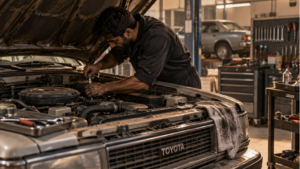
From the Garage Floor
At Gear House Garage, we occasionally see cars where the financial argument for restoration is difficult to make. Look only at market value, replacement cost or resale prospects and the answer may seem obvious.
Then you speak to the owner.
Perhaps the car belonged to his father. Perhaps it marked the early years of a business. Perhaps the family has had it long enough for it to become part of their shared history. Sometimes there is no dramatic backstory at all; it simply reminds someone of a particular period in life that they are not quite ready to lose.
Suddenly, the mathematics become less important. The owner is no longer really asking, “Is this car worth restoring?” The real question is closer to, “Can this still be saved?”
Those are two very different questions.
“Sometimes what enters the workshop is not merely a vehicle that needs saving. It is a memory someone isn’t ready to lose.”
We still look for them
Perhaps this is why enthusiasts can recognise an old love from an improbable distance. A familiar silhouette at a traffic signal can still turn the head years later. An old Land Cruiser disappears into traffic and you look twice. A Mercedes from a particular era is parked outside a shop and something about its stance feels immediately familiar. An old Patrol, BMW or Lexus in exactly the right colour can stop you mid-conversation for a second.
Sometimes you even glance at the registration plate before remembering how absurd the odds are. Recognition arrives before logic.

Then, weeks or months later, the ritual repeats. You search the model again. You find a particularly good example and imagine it back in the driveway. You wonder what it would feel like to turn the key again. For several minutes, buying one seems entirely reasonable.
Then you close the tab and continue with your life.
The thought, however, never disappears completely.
“The cars we miss most are often attached to versions of ourselves that no longer exist.”
Maybe some cars were never really assets
Perhaps that is ultimately what makes certain cars unforgettable. It is not rarity, market value, horsepower or even beauty. It is the fact that they become attached to a private emotional world that nobody else can fully see.
To everyone else, it may simply be an ageing Land Cruiser, a classic Mercedes, an old Patrol, a once-loved BMW, a well-kept Lexus or a sports car from another era. To you, it was the car that stayed through a particular season of your life.
Once a machine becomes intertwined with memory in that way, selling it becomes a practical act with emotional limitations. You can hand over the keys, sign the transfer papers, clear out the glovebox and watch its taillights disappear. Ownership, in the deeper sense, is rarely quite so clean.
Some cars leave the driveway and remain in the mind. They continue to belong to us in fragments — in familiar roads, forgotten songs, old photographs, smells and tiny details nobody else would understand. Some become stories we revisit far more often than we expected.
And some, no matter what the documents say, are never really sold at all.

“Perhaps that is why certain cars are never really sold. They simply continue their journey without us.”